pigeons & shears
Project Date: 2022
Team: Jorge Couso
Completed for Ferda Kolatan studio
Published in Pressing Matters XI
Exhibited in Venice Architecture Biennale - CITYX Virtual Pavilion
Cappadocia's geology is a landscape of accumulated intervention — a volcanic tuff terrain soft enough to carve, that centuries of habitation have hollowed into churches, homes, storage, and shelter, until geology and architecture become difficult to tell apart. If centuries of subtractive labor can render the boundary between ground and architecture illegible, what does it mean to design as an act of continued excavation rather than original construction? This project takes Cappadocia's carved terrain as a working method rather than a historical condition, proposing that architecture here is not built upon the landscape but authored through its ongoing, cumulative removal.
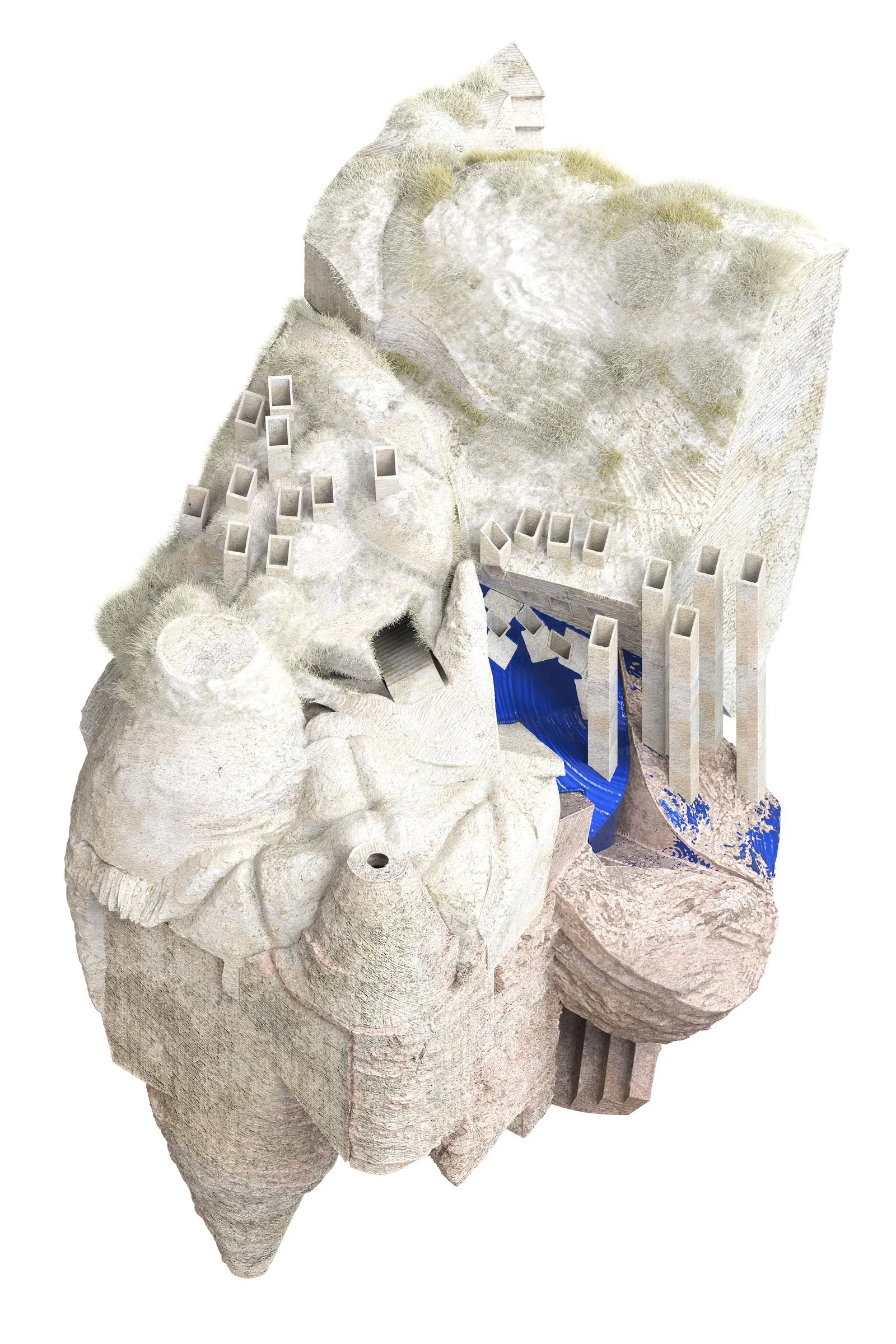
Within this broader terrain of carved habitation, certain sites intensify the entanglement between geology, labor, and inhabitation into something closer to a singular program. Pigeon Valley, just outside Uçhisar, takes its name from a centuries-old practice: for generations, local farmers relied on pigeons as their primary source of fertilizer in a landscape too arid and mineral-poor to sustain agriculture on its own, and the birds' droppings became essential to keeping vineyards and orchards productive. Over time, an entire valley was given over to housing them, its cliffs shaped less around human occupation than around the needs of another species entirely. This project takes that inversion as its starting point, asking what architecture looks like when it is not designed for a single, human-centered program but for two forms of inhabitation held in equal regard—proposing a post-anthropocentric model in which pigeon and human coexist in a strangely bizarre and hybridized model.
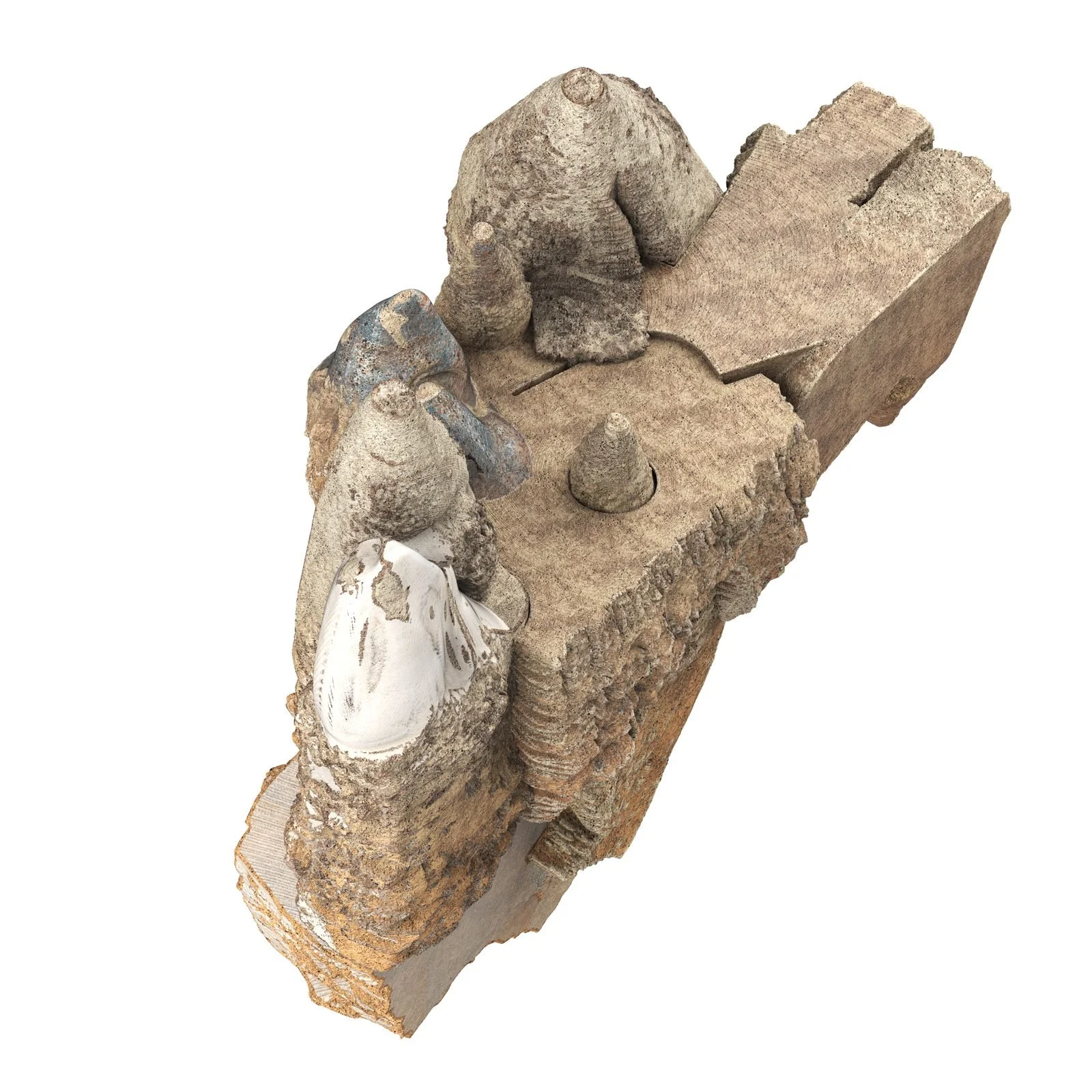
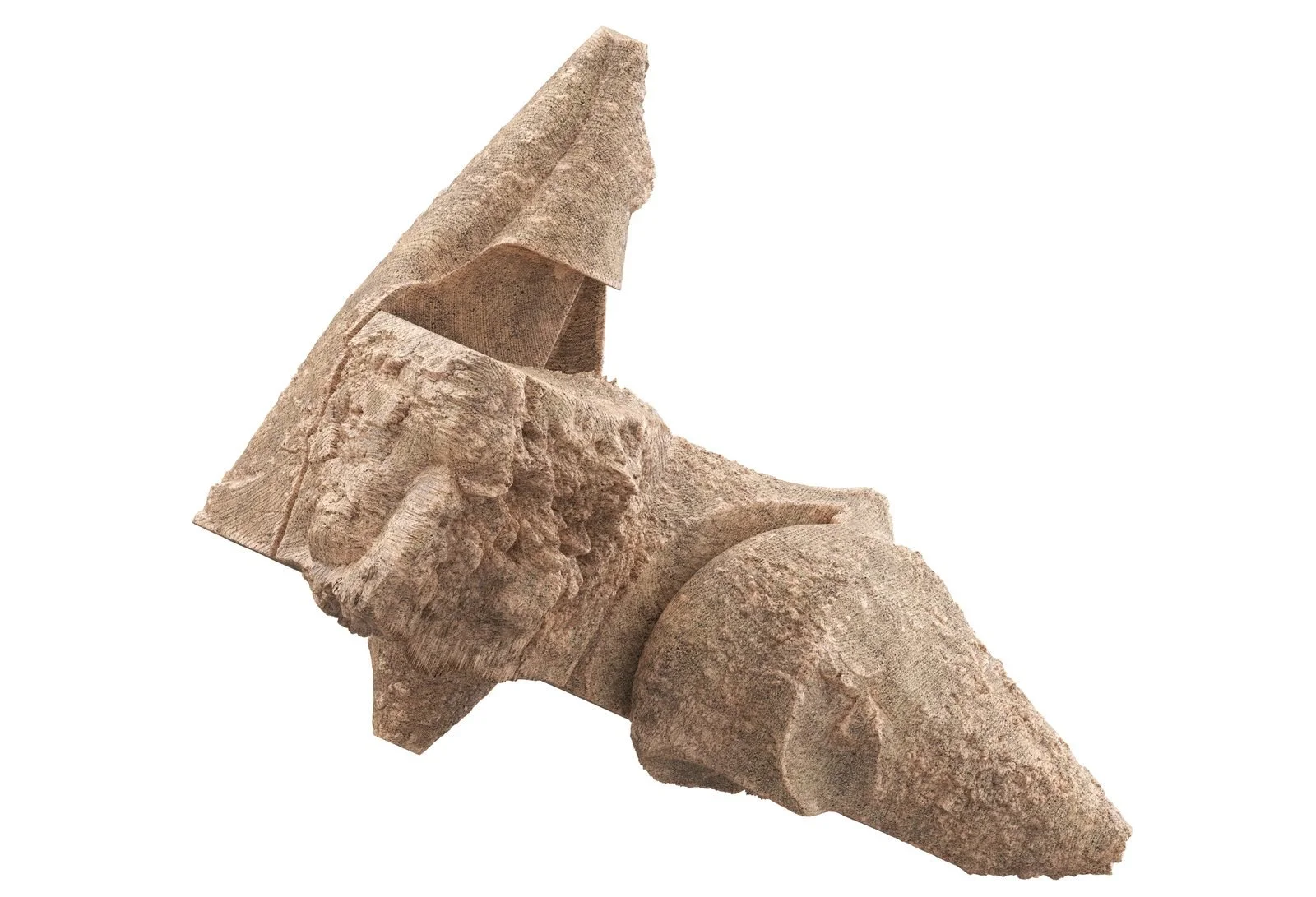
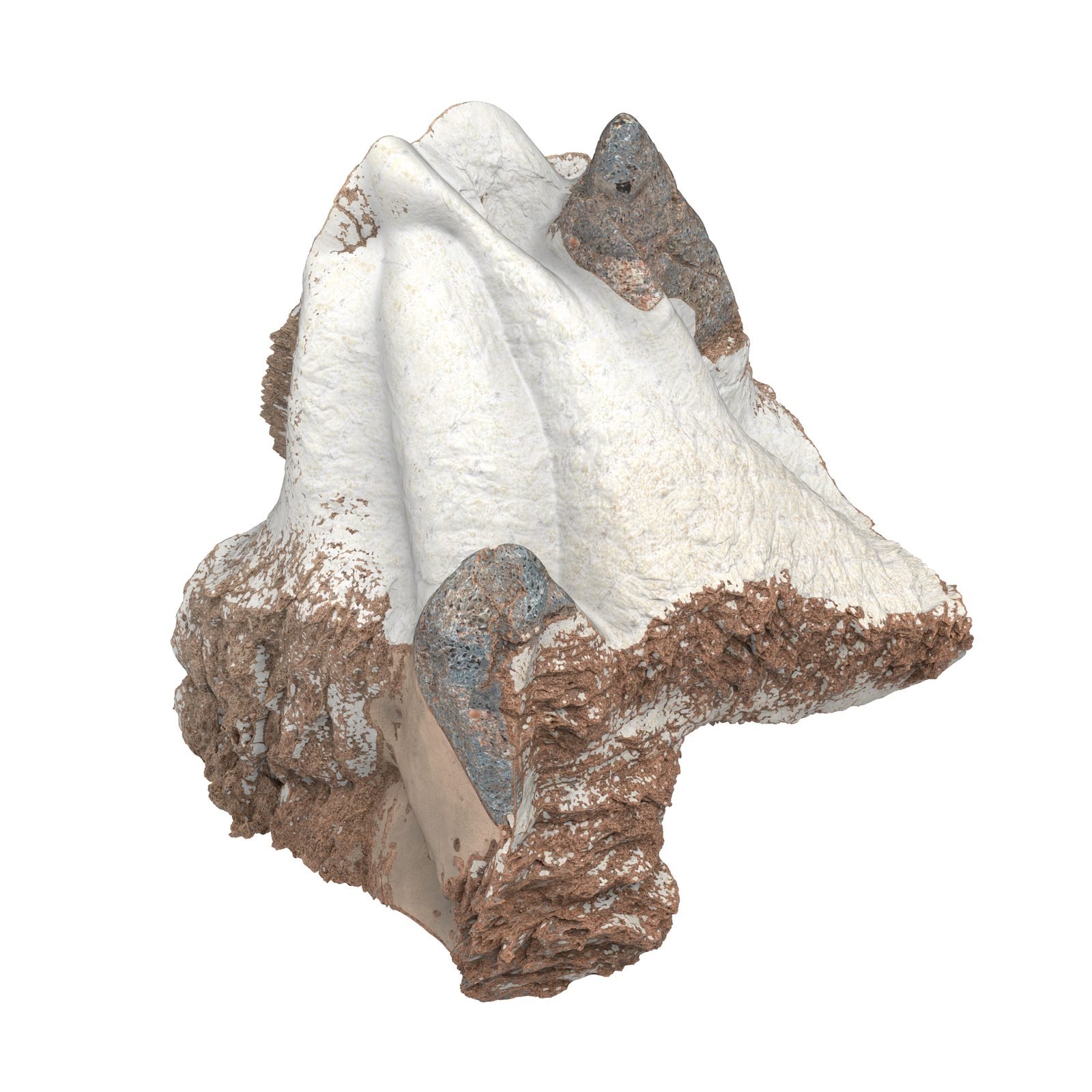
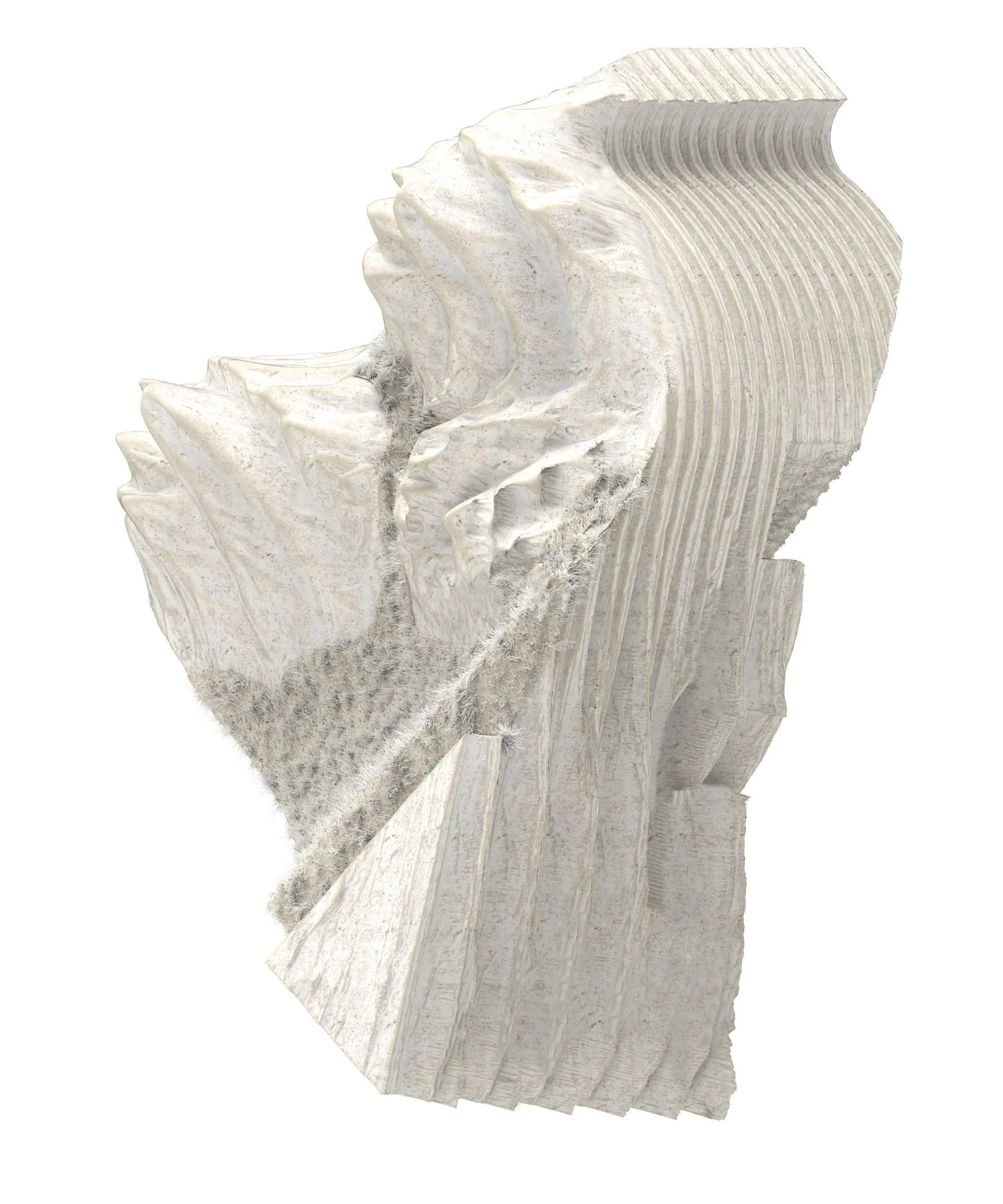
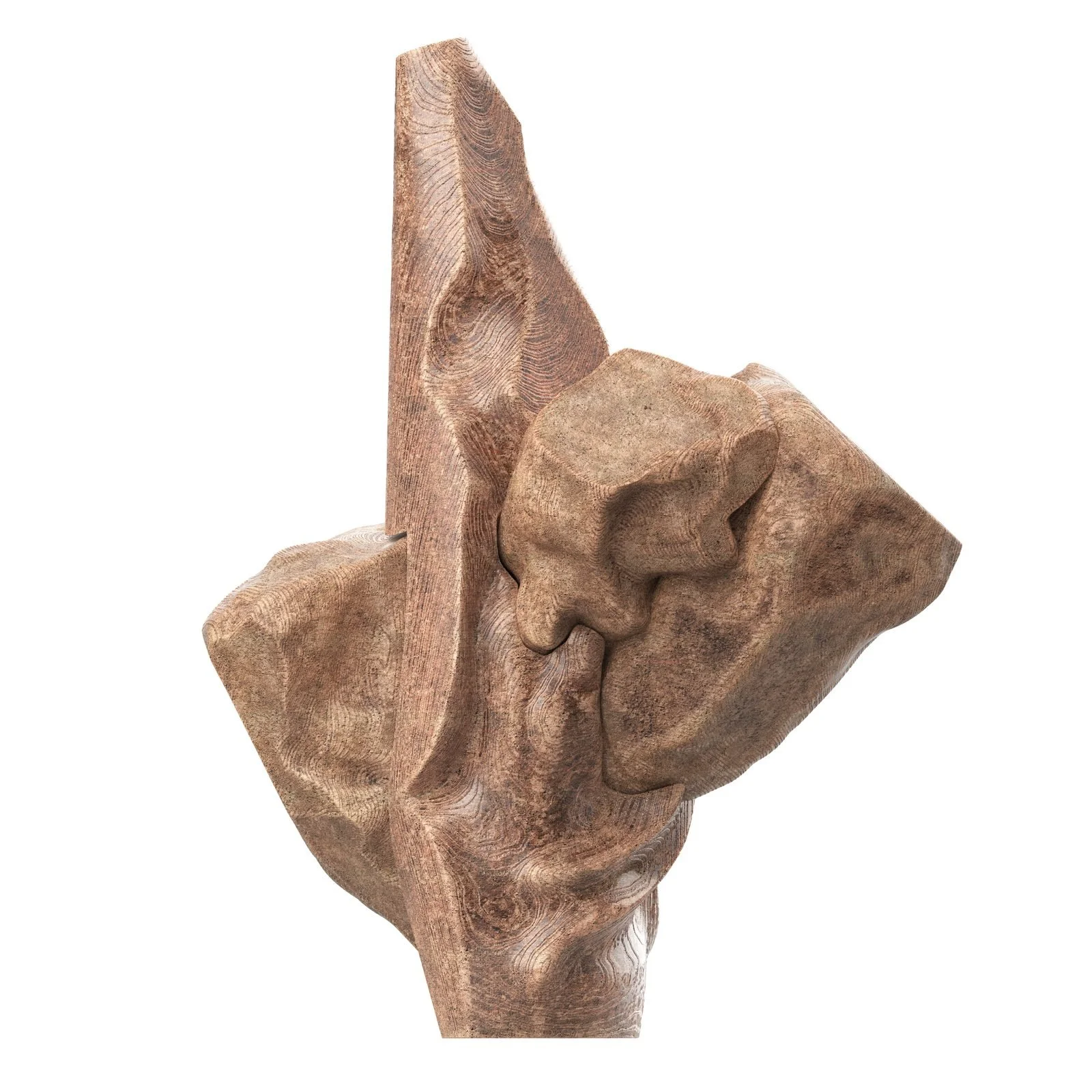
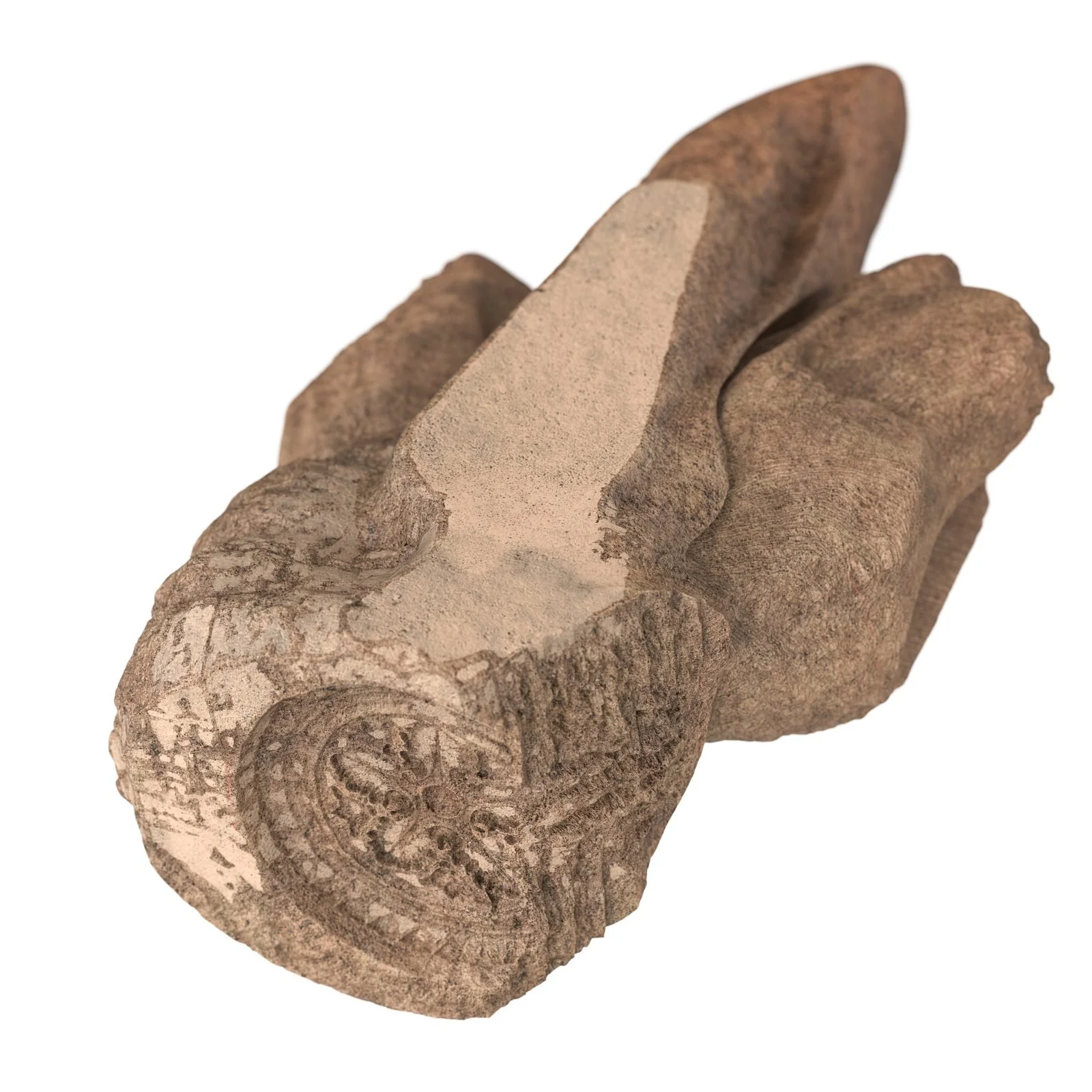
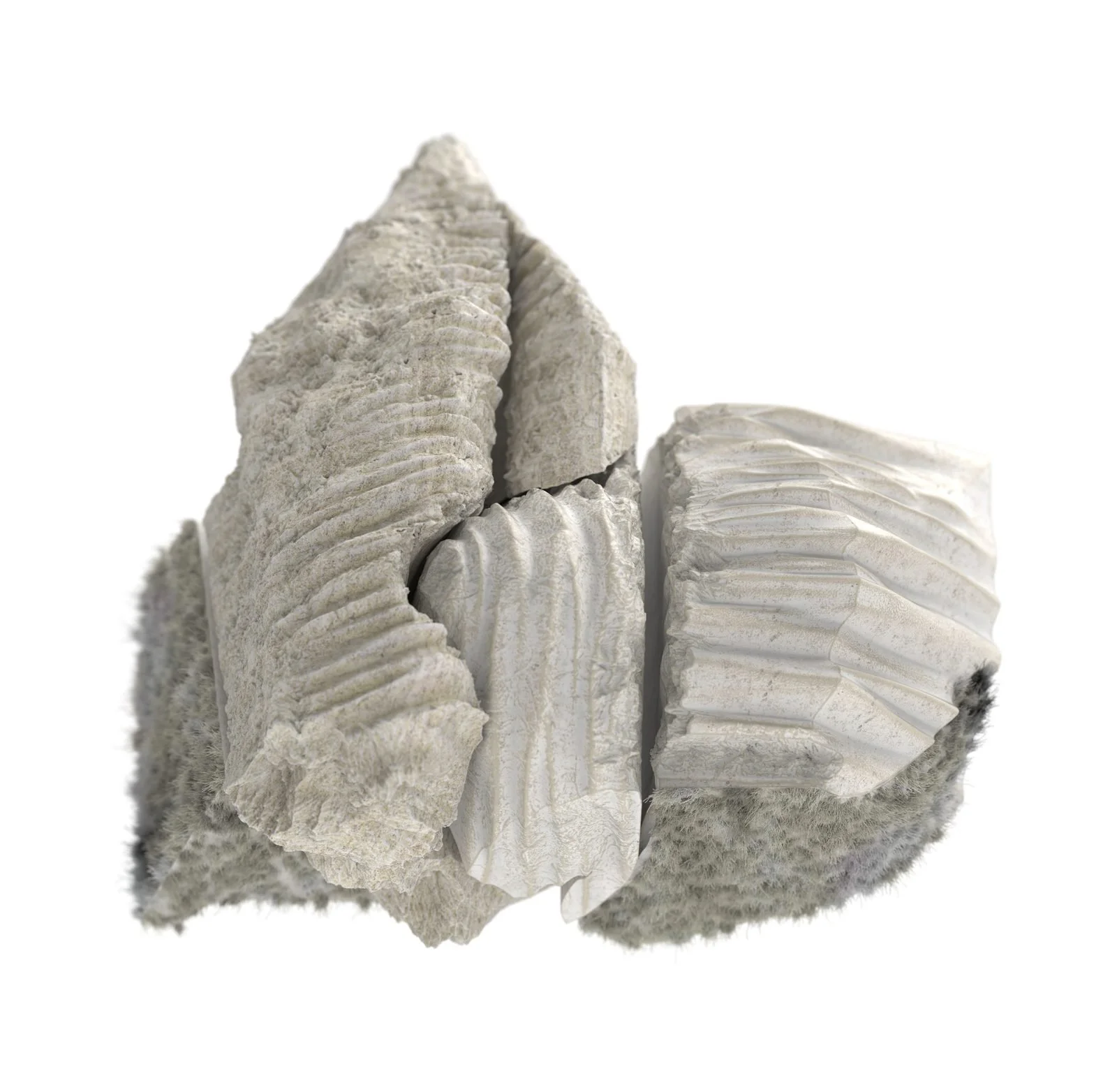
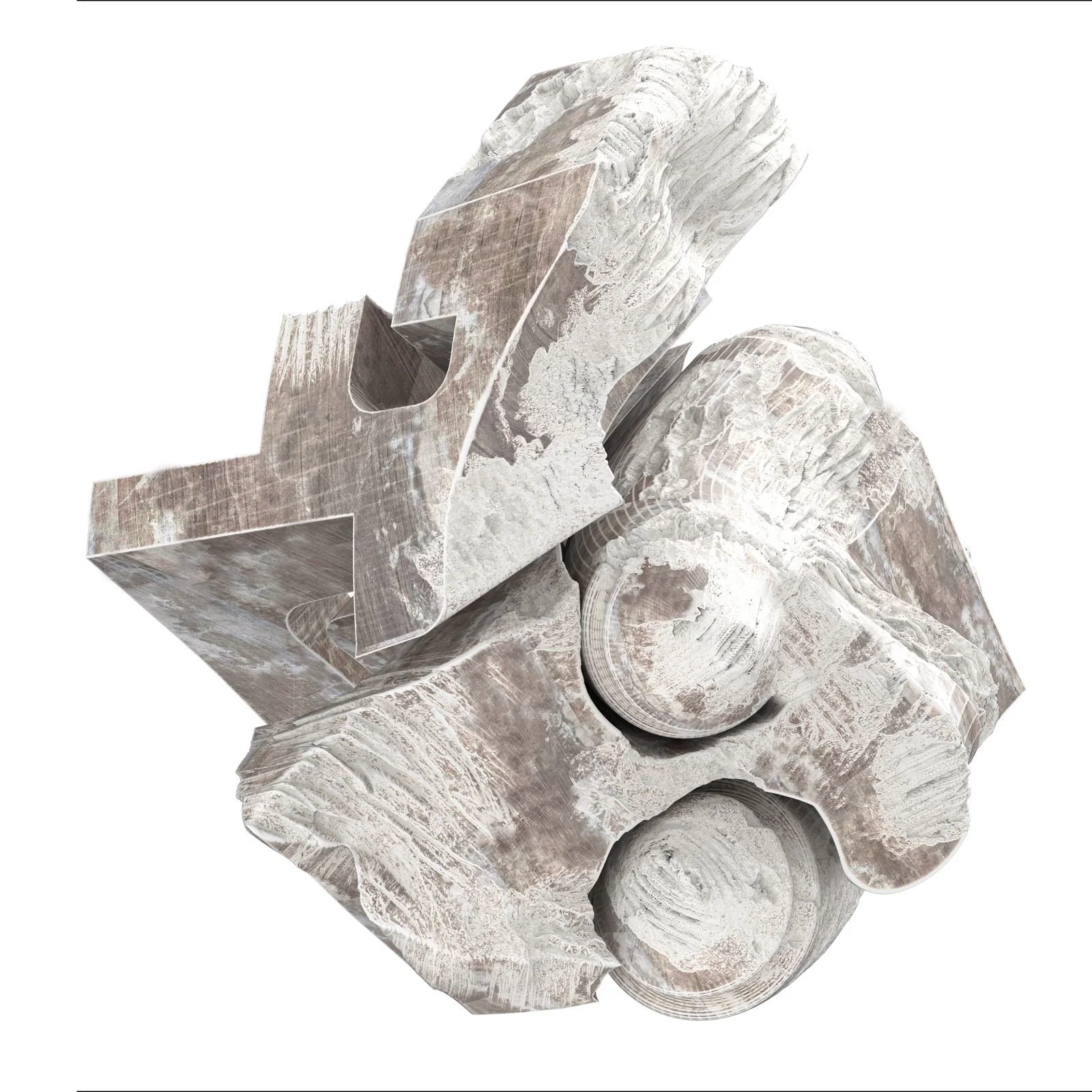
The project didn't begin at the scale of the valley — it began with a library of digitally carved artifacts, built to test the specific carving behaviors of Cappadocia's volcanic tuff and build upon a geological language that already exists, such as sheared surfaces and radial boring patterns embedded deep within the material. This first phase of the project produced a taxonomy of cuts, shears, rotations, thresholds, and voids the material itself seemed to make available. Through advanced digital modeling and rendering procedures, the geological conditions of Cappadocia were replicated and operated on through experimental carving and aggregation techniques.
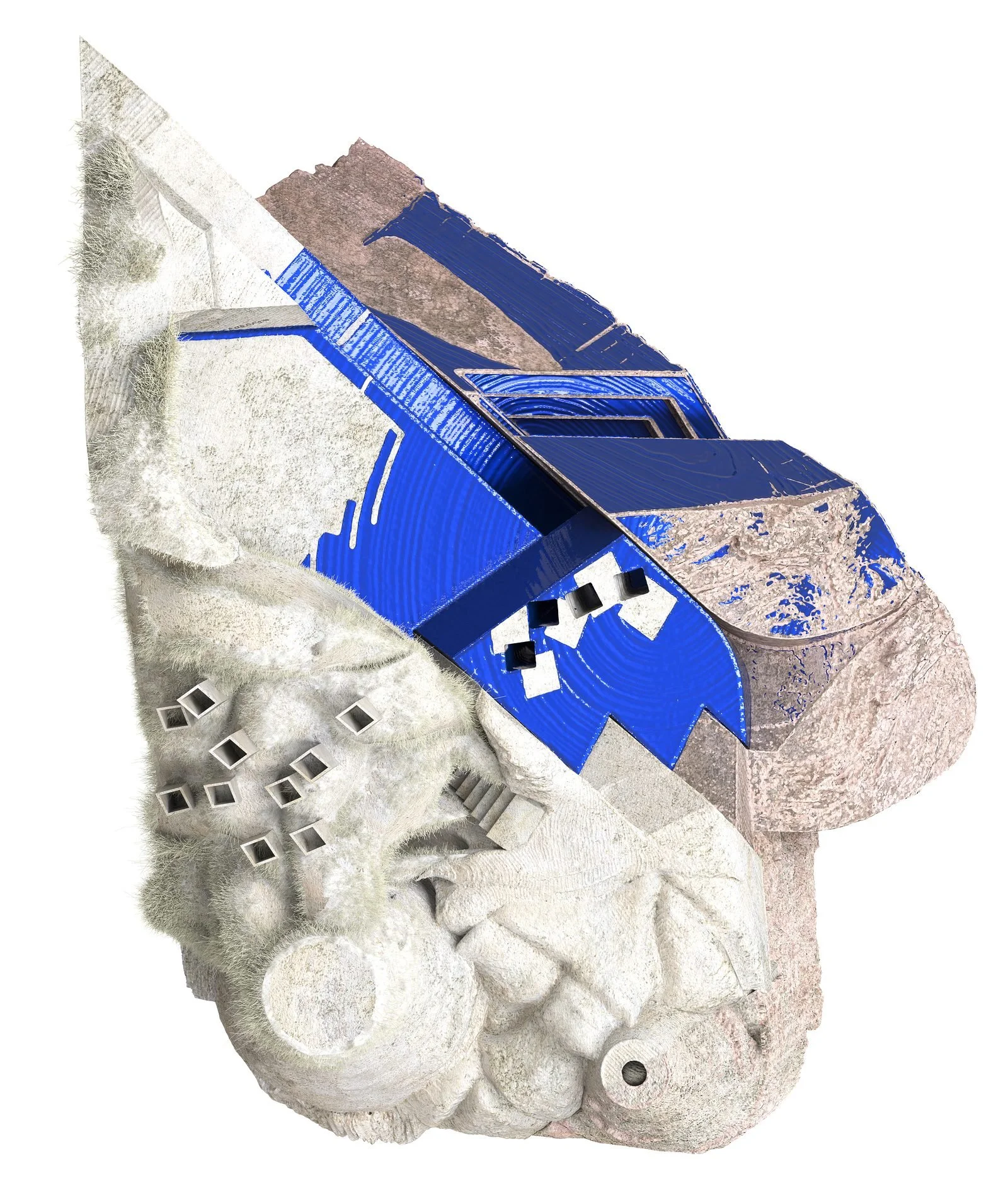
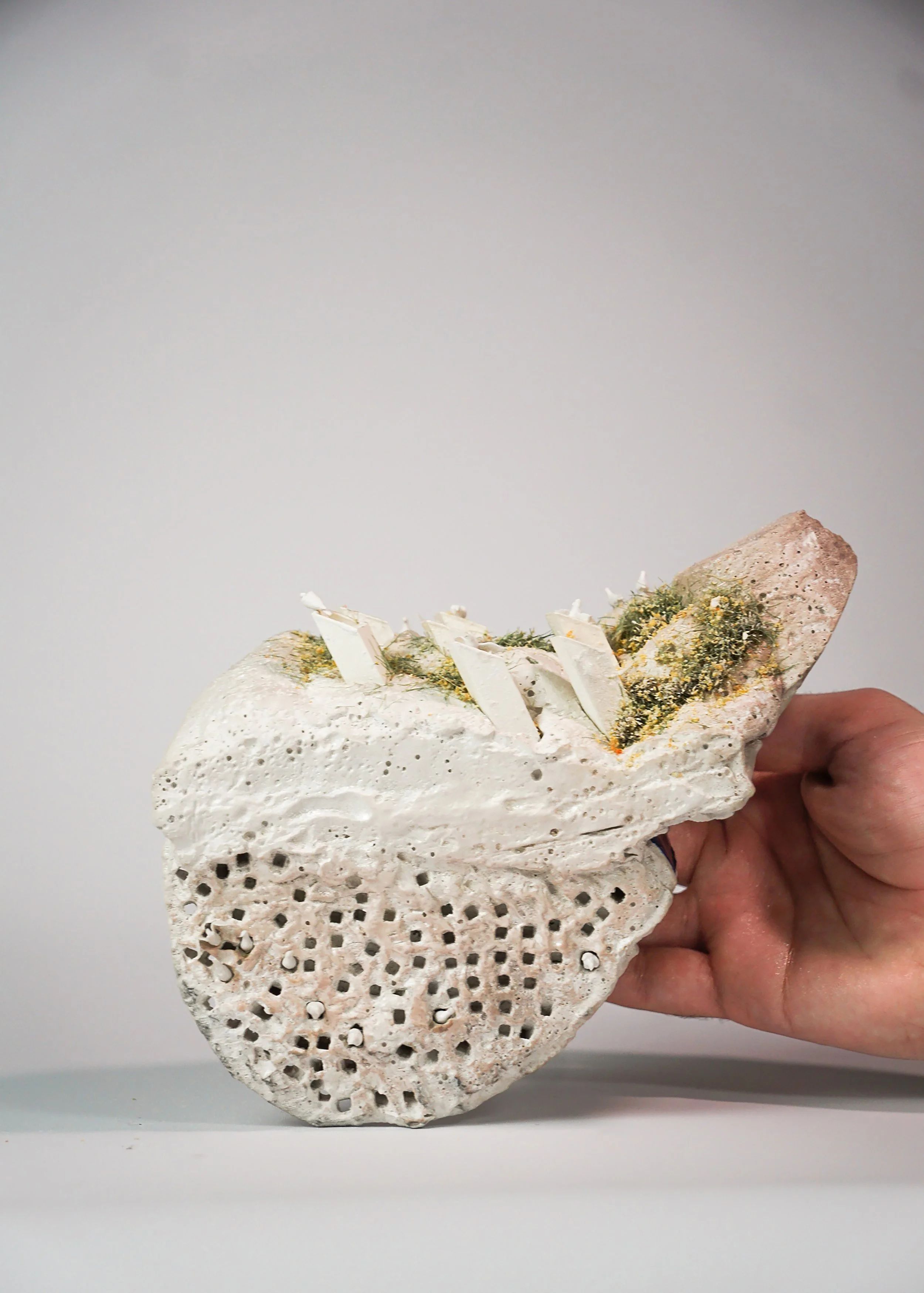
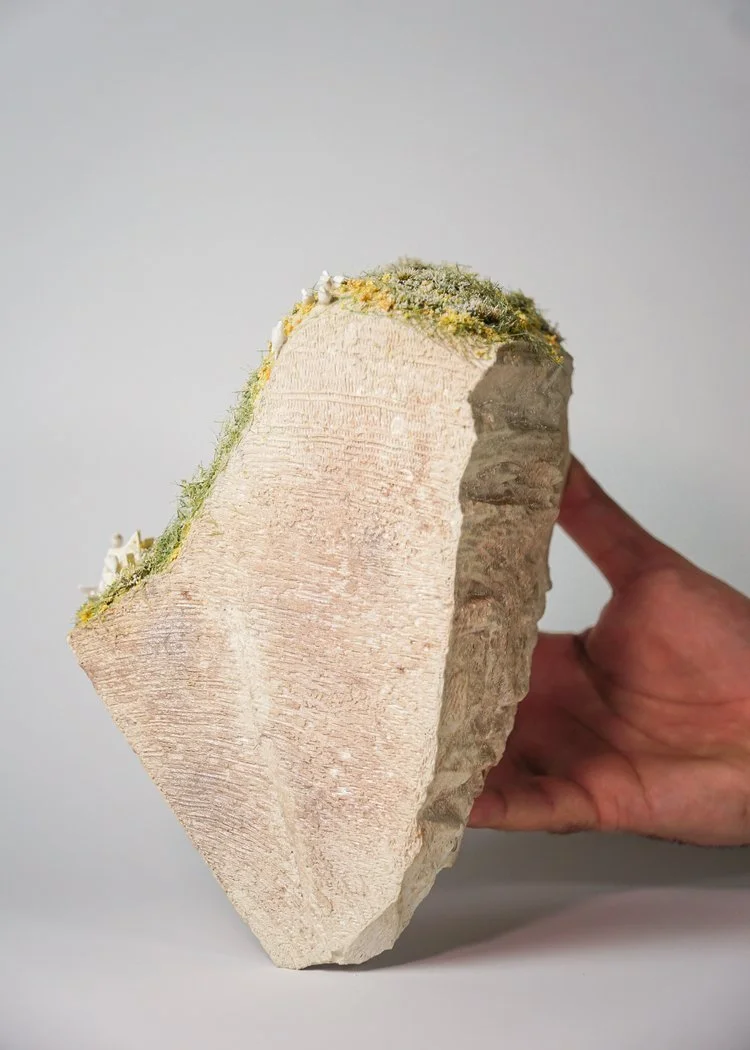
Radial boring became a primary method of prototypical digital extraction, oftentimes being deployed at oblique angles on complex volumes and geometries. The result was a series of unexpected textural and material adjacencies that became an aesthetic signature throughout the project. In addition to the radial boring patterns found on many of the materials within the region, this project simultaneously considers the 'pile' as a legitimate strategy for organization. This casual and informal juxtapositioning of parts is used to produce unlike affinities throughout the project, culminating in a hillside of strange shear and radial interventions that simultaneously appear as natural geological formations and a defamiliarized landscape.
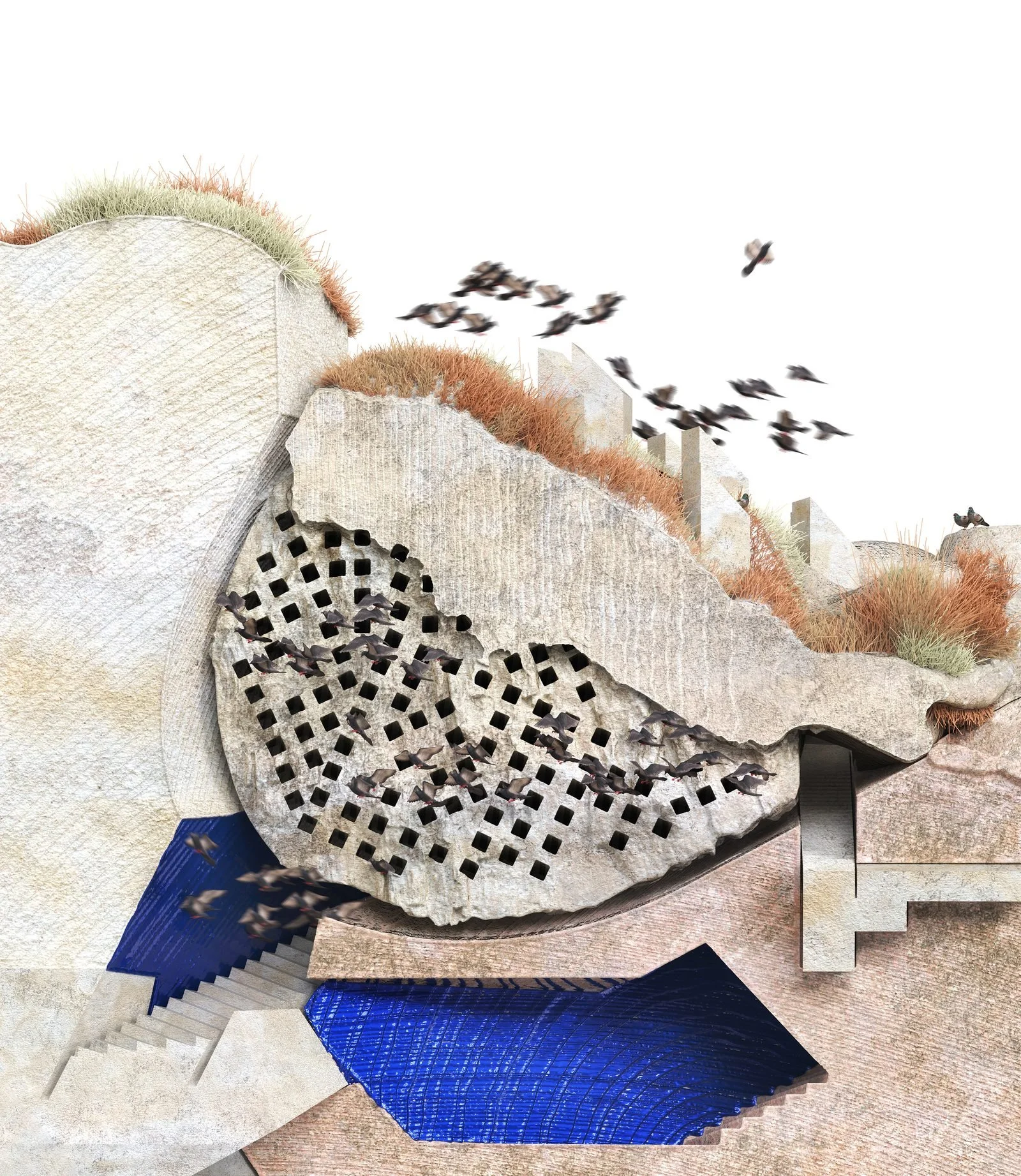
Throughout the Cappadocia region, dovecotes (Güvercinlik) are used in an agrarian effort to provide sanctuary and safety to pigeons. Appearing as both small chambers carved into the volcanic tuff and larger chimneys, their primary goal is to attract and provide comfort to pigeons so that they nest and make it their home. The pigeon droppings (guano) collected inside have historically been prized as fertilizer for the vineyards and orchards in valleys below. In an effort to create a post-anthropocentric model of inhabitation, a dense series of dovecotes perforate the hillside, extending the occupation of the pigeon to a new subterranean context.
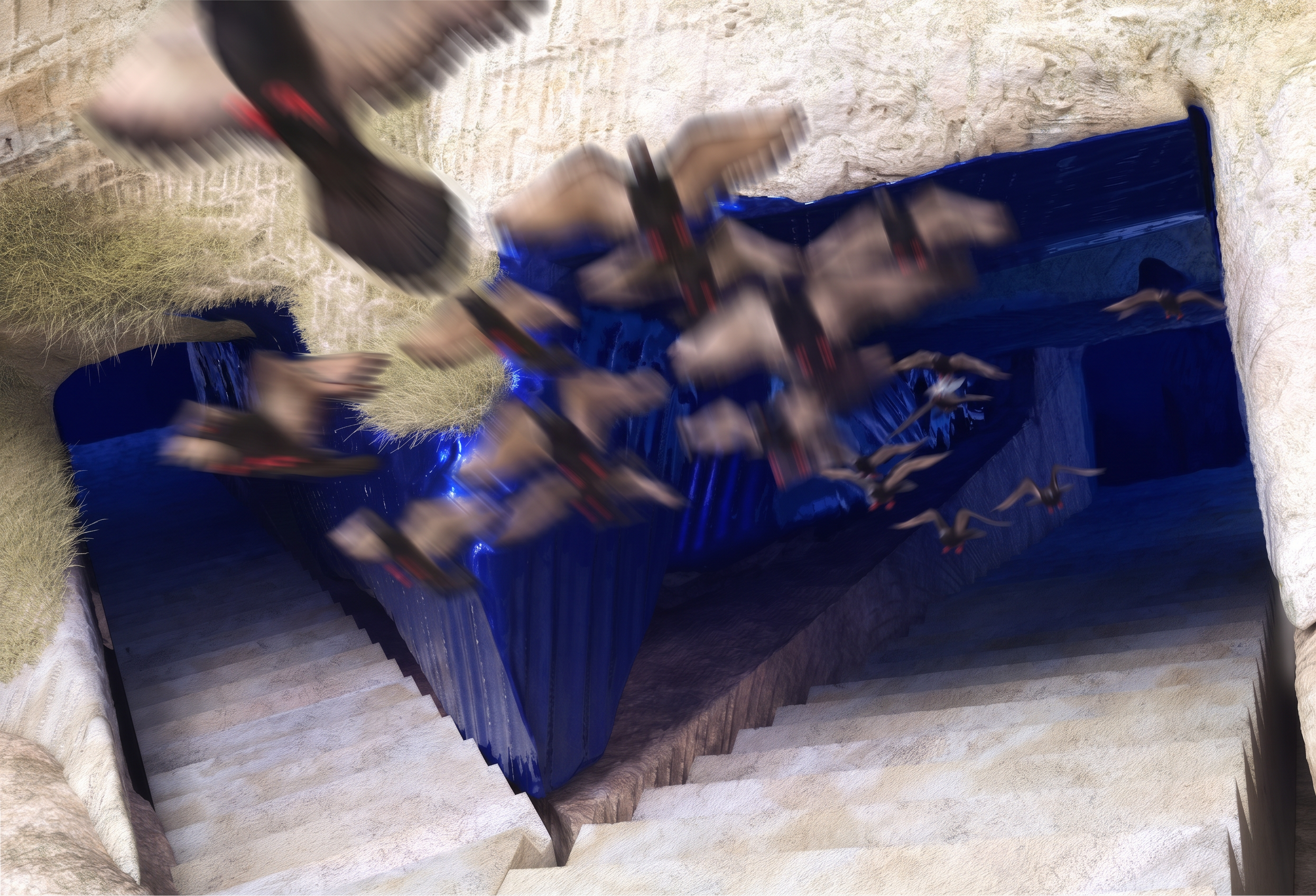
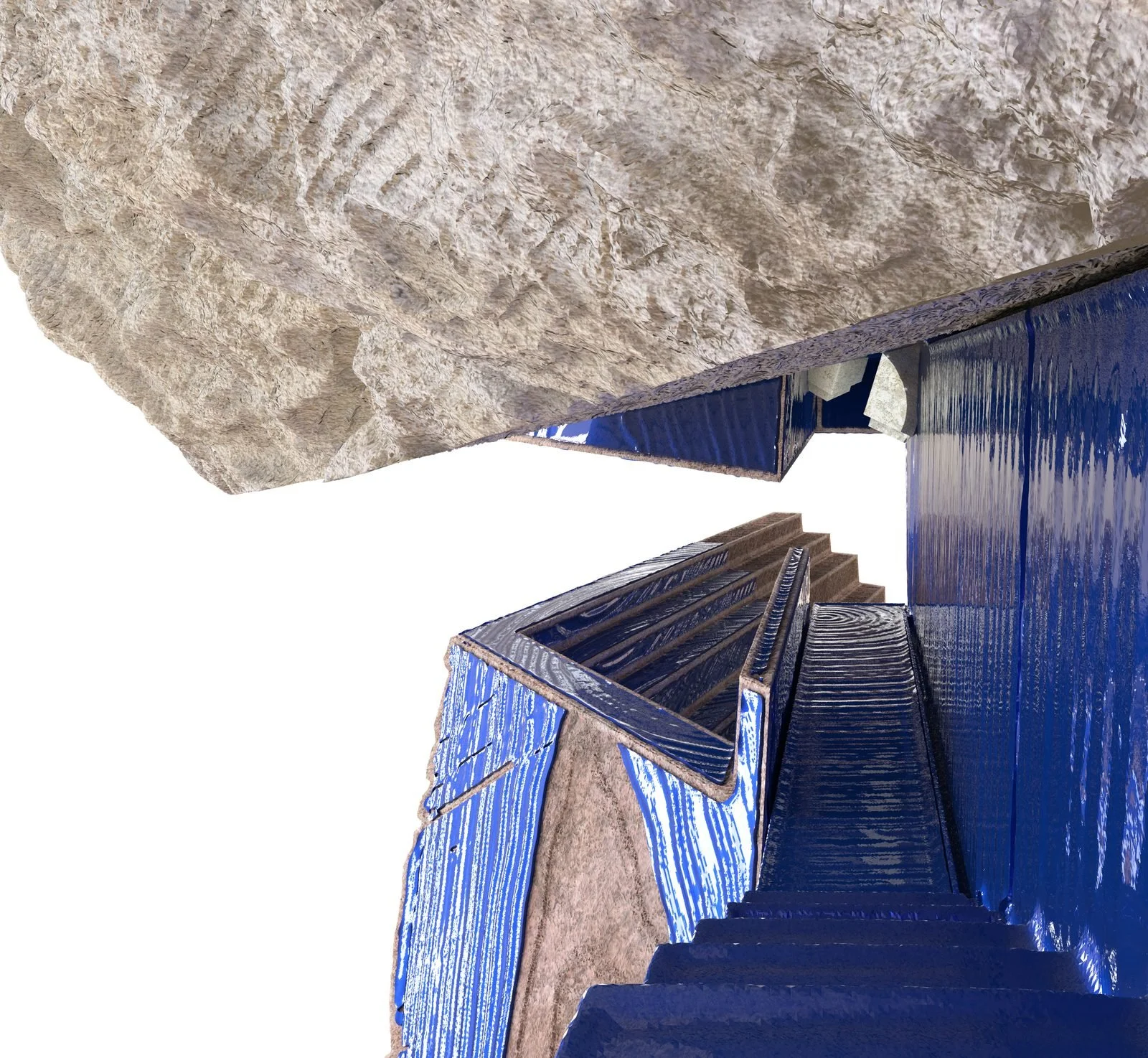
The resulting affect is one of strangeness and surprise. Deeply saturated and high-gloss blue murals coat the carved rock surfaces within the hillside. The design creates moments of tension where pigeon flocks and human visitors are forced to co-inhabit. The lack of spatial awareness within the interior of the hillside creates a Piranesian-like experience. The high-gloss blue draws on two layered visual histories already present in the region: the deep cobalt and turquoise of Iznik tilework, the Ottoman ceramic tradition renowned for its saturated blues, and the painted murals embedded throughout Cappadocia's rock-cut churches, where fresco surfaces have been carved directly into the same volcanic tuff as the dovecotes themselves. Applying a high-gloss blue to the carved artifacts folds these two traditions together — the glazed brilliance of Iznik ceramics and the pigmented, hand-applied murals native to the valley's own cliffs — so the surface reads as an inherited condition of the site. Its presence produces an aura of ritual, marking the surfaces as more than functional voids and instead as sites charged with the same reverence once reserved for the valley's painted sanctuaries.